
Frequently asked questions
Everything you’d like to know.
Straight answers about consultations, safety, pricing, memberships, policies — and every treatment we offer.
General questions
What is a medical spa, and how is it different from a traditional spa?
A medical spa blends spa-level relaxation with medically supervised treatments like injectables and lasers. At Lunè, everything is built around regenerative aesthetics — treatments that work with your body’s natural healing and collagen production, so results look natural and last longer.
Where is Lunè Medical Spa, and what areas do you serve?
We’re at 1520 Jennings Mill Road, Suite B, in Watkinsville — just off the Oconee Connector, between Clarke and Oconee County. Guests visit from Athens, Bogart, Bishop and all of Oconee County, and from as far as Winder, Jefferson, Madison, Greensboro and Milledgeville. See our service area.
Do I need a consultation before booking a treatment?
Every new client starts with a free consultation so we can understand your goals and recommend the right plan. Some treatments — lasers, Kybella, GLP-1 weight loss and peptides — always require one first. Peptide therapy consultations start at $49, and that fee is waived if you move forward. You can book in person or virtually.
Who performs treatments at Lunè, and are they licensed?
Our medical protocols are overseen by our Medical Director, Dr. Lucas Davis, a family medicine physician. Injectables are performed by nurse injector Anna Ogletree, MSN, RN, and skin, laser and head spa services by licensed aestheticians and laser practitioners. Meet the team.
What should I expect during my first visit?
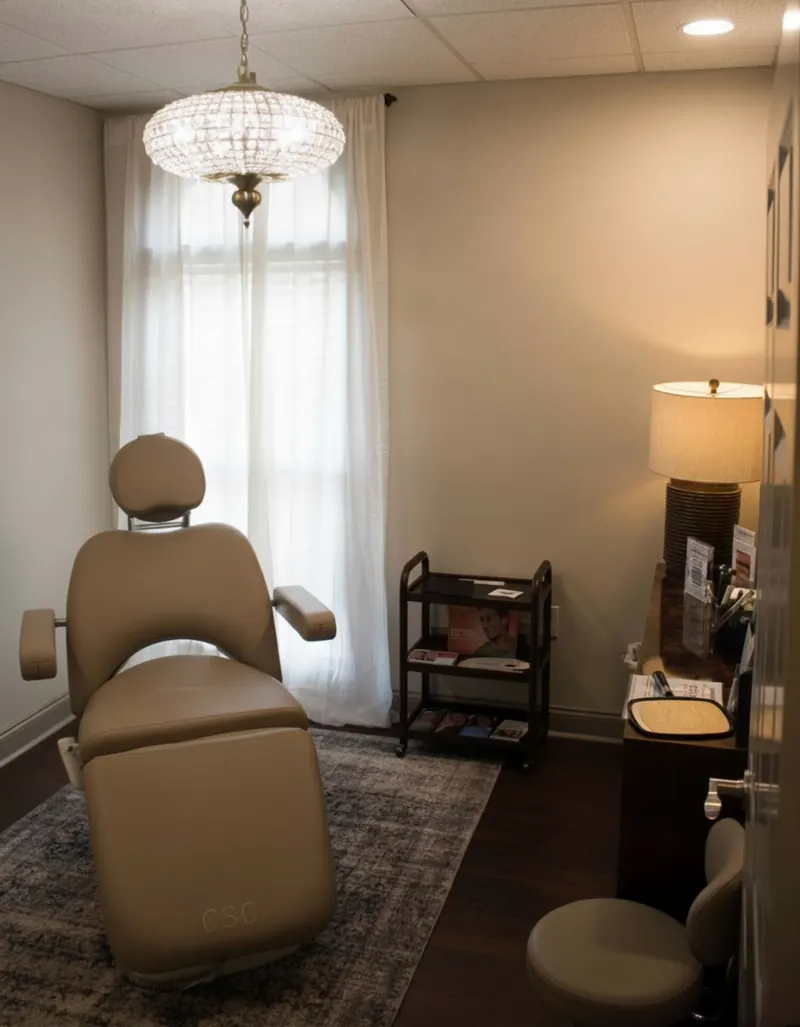
Your first visit starts with a consultation covering your health history and goals, followed by a customized recommendation in a calm, boutique setting. There’s no pressure to book anything that day — many guests start with one treatment and build a plan over time.
How much do treatments cost?
We publish our prices on every treatment page — for example, Botox is $13 a unit, head spas start at $125, and laser hair removal packages of eight start at $575. Your consultation confirms exact pricing for your plan. Browse all treatments and prices.
Does Lunè offer financing?
Yes. We offer flexible monthly payments through Cherry — no hard credit check to see your options, and 0% APR plans are available. See financing options.
Does Lunè offer memberships?
Yes — three: Botox & Filler ($99 a month, Botox at $11 a unit), Facial & Head Spa ($125 a month, eight head spas or facials a year), and Skinvestment ($299 a month, banked toward any service with exclusive discounts). Compare memberships.
How do I prepare for my appointment?
Preparation depends on the treatment — injectables and lasers may call for avoiding certain medications or sun exposure beforehand. Your provider gives you specific pre-care instructions when you book, and you’ll complete a medical history form so we can treat you safely.
What is Lunè’s cancellation policy?
We ask for 24 hours’ notice to cancel or reschedule. Late cancellations and no-shows carry a $50 fee. If you’re running late, we may need to shorten or reschedule your appointment so the next guest isn’t kept waiting.
What is your refund policy?
Because results vary from person to person, services that have been performed aren’t refundable. Unopened retail products may be returned or exchanged within a set time frame — just ask at the front desk.
Are medical spa treatments safe?
Yes, when they’re performed by licensed, trained providers using FDA-cleared or FDA-approved technology. Your consultation covers any risks specific to your plan, and your provider may decline or postpone a treatment if it isn’t medically appropriate for you.
Does Lunè treat men as well as women?
Absolutely. Botox, laser hair removal (including beard shaping), CoolPeel, body sculpting and our Gentlemen’s Facial are all popular with men, and every plan is customized to individual goals.
How do I book an appointment?
Book online any time, call us at (706) 608-8054, or start with a virtual consultation if you’d like to talk first. Every treatment page has a Book button that opens our live schedule.
What are your hours?
Monday–Wednesday 9 AM–6 PM, Thursday 9 AM–8 PM, and Friday–Saturday 9 AM–4 PM. We’re closed on Sunday.
Do you sell professional skincare?
Yes — we carry medical-grade lines including Environ, Epicutis, Skinbetter Science, SkinMedica and Milbon for hair and scalp. Your provider can build a home routine around your treatments. Shop our brands.
Botox & Dysport Treatment page →
What is the difference between Botox, Dysport, and Letybo?
Botox, Dysport, and Letybo are all FDA-approved neurotoxins that work by relaxing facial muscles; the main differences are how quickly they take effect, how they spread in the tissue, and dosing units, but they provide very similar wrinkle-smoothing results.
How long do neurotoxin results last?
Results typically last about 3–4 months, though this can vary depending on the individual and the treatment area.
When will I see results after treatment?
Most people begin to notice results within 3–5 days, with full results appearing around 10–14 days.
Is there downtime after neurotoxin injections?
There is little to no downtime, and most clients return to normal activities immediately after treatment.
How much does Botox cost at Lunè?
Botox is $13 per unit, or $11 per unit for Botox & Filler and Skinvestment members. Most areas take a modest number of units; your injector confirms the dose and total at your consultation.
Does Botox hurt?
Most clients describe it as a quick pinch, and there’s no downtime — you can go right back to your day. Mild redness at the injection sites is normal and fades quickly.
What areas can be treated with neurotoxins?
Forehead lines, frown lines (the “11s”), crow’s feet, bunny lines, lip lines, gummy smiles, chin dimpling, masseter and jawline slimming, and neck bands. Your injector recommends the right areas for your goals.
When should I start getting Botox?
There’s no single right age — some clients start in their late 20s as prevention, others once lines are visible at rest. Your provider can advise based on your skin and muscle movement.
Who is a good candidate for neurotoxin treatments?
Most healthy adults are good candidates, though neurotoxins aren’t recommended during pregnancy or breastfeeding. Your consultation confirms candidacy based on your health history.
Dermal Fillers Treatment page →
What do dermal fillers treat?
Dermal fillers restore lost volume, enhance facial contours, smooth wrinkles, and add fullness to areas like the lips, cheeks, jawline, and under-eyes.
Do filler injections hurt?
Most fillers contain lidocaine for comfort, and topical numbing can be used to minimize discomfort during treatment.
How long do fillers last?
Results typically last anywhere from 6 months to 2 years depending on the product used and the treatment area.
Is there downtime after filler injections?
Downtime is minimal, though mild swelling, bruising, or tenderness can occur for a few days.
Are dermal fillers reversible?
Hyaluronic acid fillers can be safely dissolved with a specialized enzyme if adjustments are needed.
What’s the difference between filler and Botox?
Botox relaxes the muscles that cause movement lines, while filler adds volume to soften static lines and shape features like the lips, cheeks and jawline. Many clients combine the two.
What areas can be treated with dermal filler?
Lips, cheeks, under-eyes, jawline, chin, smile lines and marionette lines — customized to your goals and facial anatomy.
How much does filler cost?
A half syringe of Juvéderm is $325; full syringes range from $575 (Juvéderm Ultra, Ultra Plus, Volbella) to $750 (Vollure, Voluma). Members save 10% on filler.
Sculptra Treatment page →
What does Sculptra treat?
Sculptra is used to gradually restore lost facial volume, improve skin firmness, and soften wrinkles by stimulating natural collagen production.
How is Sculptra different from traditional fillers?
Unlike traditional fillers that add immediate volume, Sculptra works gradually by encouraging your body to produce its own collagen over time.
How many treatments will I need?
Most patients need a series of 2–3 sessions spaced several weeks apart for optimal results.
How long do Sculptra results last?
Results can last up to two years or longer as new collagen continues to support the skin.
Is there downtime after treatment?
Downtime is minimal, though mild swelling, bruising, or tenderness may occur for a few days after injections.
Radiesse Hyperdilute Treatment page →
What does Radiesse Hyperdilute treat?
Radiesse Hyperdilute is used to improve skin laxity, crepiness, and texture while stimulating collagen production for firmer, smoother-looking skin.
What areas can be treated with Radiesse Hyperdilute?
It is commonly used on the neck, chest, arms, abdomen, thighs, and buttocks to improve skin quality and firmness.
How long do results last?
Results can last around 12–18 months as the treatment stimulates the body’s natural collagen production.
Is there downtime after treatment?
Downtime is minimal, though mild swelling, bruising, or tenderness at the injection sites may occur for a few days.
When will I see results?
Some improvement may be seen shortly after treatment, with continued enhancement over several weeks as collagen builds.
SkinVive Treatment page →
What does Skinvive treat?
Skinvive improves skin hydration, smoothness, and overall skin quality, especially in the cheek area.
How is Skinvive different from dermal fillers?
Unlike traditional fillers that add volume, Skinvive uses microdroplets of hyaluronic acid to enhance skin hydration and texture.
How long do Skinvive results last?
Results can last up to about 6 months, depending on individual skin and lifestyle factors.
Is there downtime after Skinvive injections?
Downtime is minimal, though mild swelling, redness, or small injection marks may occur temporarily.
When will I see results?
Many clients notice smoother, more radiant skin within a few weeks as hydration and skin quality improve.
Kybella Treatment page →
What does Kybella treat?
Kybella is used to reduce stubborn fat beneath the chin, commonly known as a double chin, and can also be used in other small areas of localized fat.
How many treatments will I need?
Most patients need a series of 2–4 treatments spaced several weeks apart for optimal results.
Is there downtime after Kybella?
Swelling is common after treatment and may last several days, along with possible redness, tenderness, or bruising in the treated area.
Are the results permanent?
Yes, once Kybella destroys fat cells, they cannot store fat again, making the results long-lasting with a healthy lifestyle.
When will I see results?
Improvements usually begin to appear after a few weeks as the body naturally processes and eliminates the destroyed fat cells.
PRP & Growth Factors Treatment page →
What are growth factors used for?
Growth factors help stimulate skin repair, collagen production, and overall skin rejuvenation to improve tone, texture, and firmness.
How are growth factors applied?
They are often applied topically during treatments like microneedling or delivered through injections to enhance skin regeneration.
Are growth factor treatments safe?
Yes, when administered by trained professionals, growth factor treatments are considered safe and are commonly used in regenerative skincare.
Is there any downtime?
Downtime depends on the treatment paired with the growth factors, but many clients experience minimal recovery time.
When will I see results?
Results develop gradually as collagen production increases, with noticeable improvements in skin quality over several weeks.
Laser Hair Removal Treatment page →
How does laser hair removal work?
Laser hair removal uses concentrated light energy to target and disable hair follicles, reducing future hair growth.
How many treatments will I need?
Most clients require a series of 6–8 sessions spaced several weeks apart to effectively target hair during different growth cycles.
Is laser hair removal painful?
Most people describe the sensation as a quick snap or mild heat on the skin, and many modern lasers include cooling technology for comfort.
Is there any downtime after treatment?
There is little to no downtime, though mild redness or sensitivity in the treated area may occur for a short time.
Is laser hair removal permanent?
Laser hair removal provides long-term hair reduction, and occasional maintenance treatments may be needed to maintain results.
How much does laser hair removal cost?
Laser hair removal is sold in packages of eight sessions, from $575 for small areas like the upper lip, chin or between the brows to $1,840 for full legs. Underarms and bikini are $840; a women’s Brazilian is $1,000.
Do you offer laser hair removal for men?
Yes — beard shaping, full beard, chest, back, arms and men’s Brazilian are all on our menu.
How should I prepare for laser hair removal?
Shave the area the day before, and avoid waxing, plucking and sun exposure in the weeks before your session so the laser can target the follicle. Your provider will give you complete instructions.
CoolPeel® CO₂ Laser Treatment page →
What does CoolPeel treat?
CoolPeel improves fine lines, sun damage, enlarged pores, mild skin laxity, and uneven skin texture.
How much downtime should I expect?
CoolPeel is designed for minimal downtime, with most clients experiencing mild redness for a few days rather than significant peeling.
Is CoolPeel painful?
Most patients tolerate the treatment well with topical numbing, describing the sensation as warm with mild prickling.
How many sessions will I need?
Some clients see improvement after one treatment, but a series of sessions is often recommended for optimal results.
When will I see results?
Skin typically looks brighter within days, with continued improvement in texture and firmness over the following weeks as collagen rebuilds.
How much does CoolPeel cost?
CoolPeel starts at $400 for the hands or scalp; a full face is $600 and face, neck and chest $900. A consultation is required before your first treatment.
DEKA CO₂ Laser Resurfacing Treatment page →
What does CO₂ laser rejuvenation treat?
CO₂ laser treatments improve fine lines, wrinkles, acne scars, sun damage, uneven texture, and overall skin tone.
How much downtime should I expect?
Downtime varies by treatment depth, but most clients experience redness and peeling for about 5–10 days.
Is the treatment painful?
A topical numbing cream is applied beforehand, and most clients report only mild to moderate discomfort during the procedure.
How many treatments will I need?
Many patients see significant improvement after one session, though some may benefit from a series depending on their goals.
When will I see results?
Initial improvements appear once healing begins, with continued collagen remodeling and skin tightening over the following weeks to months.
Fusion™ Laser Treatment page →
What does Fusion laser treat?
Fusion laser treatments improve fine lines, wrinkles, sun damage, acne scars, uneven texture, and overall skin tone.
Is the treatment painful?
A topical numbing cream is typically applied beforehand, and most clients experience only mild to moderate discomfort during the procedure.
How much downtime should I expect?
Downtime varies depending on the intensity of the treatment, but most people experience redness and mild peeling for several days.
How many treatments will I need?
Some patients see noticeable improvement after one treatment, while others may benefit from a series depending on their skin concerns.
When will I see results?
Initial improvements can appear as the skin heals, with continued enhancement over several weeks as collagen production increases.
Radiant Lift Treatment page →
What does Radiant Lift treat?
Radiant Lift helps improve skin laxity, fine lines, and overall skin texture while stimulating collagen for firmer, smoother-looking skin.
Is the Radiant Lift treatment painful?
Most clients describe the treatment as warm and comfortable, with minimal discomfort during the session.
How many treatments will I need?
Radiant Lift is designed as a single-session treatment, with maintenance every 6 to 12 months to help keep results.
Is there any downtime after treatment?
Radiant Lift treatments generally require little to no downtime, allowing most clients to return to normal activities the same day.
When will I see results?
Some improvement may be noticeable shortly after treatment, with continued skin tightening and collagen development over the following weeks.
Everesse Skin Tightening Treatment page →
What does Everesse treat?
Everesse is designed to improve skin laxity, firmness, and texture while promoting collagen production for smoother, tighter-looking skin.
Is Everesse painful?
Most clients describe the treatment as warm and comfortable, with minimal discomfort during the session.
How many treatments will I need?
A series of treatments is typically recommended for optimal results, depending on your skin goals and treatment area.
Is there any downtime?
Everesse involves little to no downtime, and most clients can return to normal activities the same day.
When will I see results?
Some improvement may be visible shortly after treatment, with continued tightening and firming developing over several weeks as collagen production increases.
How does RF skin tightening compare to a facelift?
Everesse is a non-surgical alternative for mild to moderate laxity, offering gradual, natural-looking lift without incisions. It isn’t a replacement for surgery in advanced cases.
What areas can Everesse treat?
Face, neck, eyes and jawline, plus the abdomen, arms, buttocks, thighs and knees.
Elluminate Laser Facial Treatment page →
What is an Elluminate laser treatment?
Elluminate is a multi-modality laser treatment that combines advanced technologies to improve skin tone, texture, redness, and pigmentation in a single session.
How many Elluminate treatments will I need?
Most patients benefit from a series of 3–5 treatments spaced about 3–4 weeks apart for optimal results, though improvements can be seen after just one session.
Is there any downtime after Elluminate?
Elluminate is designed to have minimal downtime, with most patients experiencing mild redness or sensitivity that resolves within a few hours to a couple of days.
What areas can be treated with Elluminate?
Elluminate is most commonly performed on the face and neck but can also be used on the chest and other areas with sun damage or uneven skin tone.
When will I see results from Elluminate?
Many patients notice brighter, clearer skin within a few days, with continued improvement over several weeks as collagen production increases.
IPL Photofacial Treatment page →
What does IPL treat?
IPL can improve sun damage, brown spots, redness, rosacea, broken capillaries, and uneven skin tone.
Is IPL painful?
Most clients describe the sensation as a quick warm snap on the skin, similar to a rubber band, and it is generally well tolerated.
How many IPL treatments will I need?
Many people need a series of 3–5 treatments spaced a few weeks apart for the best results.
Is there downtime after IPL?
IPL typically has minimal downtime, though you may experience mild redness and darkening of pigment spots before they fade.
When will I see results?
Improvements often begin to appear within a week as pigmentation fades and skin tone becomes clearer and more even.
Laser Vein Therapy Treatment page →
What types of veins can laser vein treatment treat?
Laser vein treatments are commonly used to reduce the appearance of spider veins and small broken capillaries on the face and legs.
How does laser vein treatment work?
The laser delivers targeted heat to the vein, causing it to collapse so the body can gradually absorb it and improve the skin’s appearance.
Is laser vein treatment painful?
Most clients feel a brief warm snapping sensation during treatment, but it is generally well tolerated.
How many treatments will I need?
The number of treatments varies depending on the size and number of veins, but many people need 1–3 sessions for best results.
Is there downtime after treatment?
Downtime is minimal, though mild redness or swelling may occur temporarily in the treated area.
Venus Nova Body Sculpting Treatment page →
How long does each session last?
Typically each treatment lasts 30–60 minutes per session, depending on which areas are treated.
Is there any downtime?
None. You can resume normal activities immediately after treatment.
Is it painful?
There is little to no discomfort, and each type of treatment is well tolerated. Most people find it comfortable and relaxing. The only discomfort may be during FLEX EMS or Muscle Conditioning treatments.
Does it work if I'm on weight loss medication?
Yes. Many GLP-1 users choose Venus Nova to maintain muscle definition while losing weight.
Facials & HydraFacial Treatment page →
What does a facial treat?
Facials can address concerns like acne, dryness, dullness, fine lines, clogged pores, and uneven skin tone.
How often should I get a facial?
Most people benefit from a facial every 4–6 weeks to maintain healthy, balanced skin.
Are facials safe for sensitive skin?
Yes, facials can be customized to suit sensitive skin and specific skin conditions.
Is there downtime after a facial?
Most facials have little to no downtime, though you may experience mild redness that subsides quickly.
When will I see results?
Many clients notice an immediate glow and smoother texture, with continued improvement when treatments are done consistently.
Which facial should I choose?
If you want an instant glow, try the European Glass Skin Facial or a HydraFacial; for breakouts, the Acne Facial; for gentle renewal, the Environ Peel-Less Peel. Not sure? Your aesthetician will customize it at your visit.
Chemical Peels Treatment page →
What does a chemical peel treat?
Chemical peels can improve acne, fine lines, sun damage, hyperpigmentation, uneven tone, and rough skin texture.
How much downtime should I expect?
Downtime varies by peel strength — light peels may have little to no peeling, while medium-depth peels can involve several days of visible flaking.
Will my skin actually peel?
Not always; some peels cause visible peeling while others work at a cellular level with minimal flaking.
How many treatments will I need?
Many clients see improvement after one peel, but a series of treatments is often recommended for best results.
Is a chemical peel safe for sensitive skin?
Yes, when properly selected and performed by a trained professional, chemical peels can be customized for sensitive skin types.
Microneedling Treatment page →
What does microneedling treat?
Microneedling helps improve fine lines, acne scars, enlarged pores, uneven texture, and overall skin tone by stimulating collagen production.
Is microneedling painful?
A topical numbing cream is applied before the treatment, so most clients experience minimal discomfort.
How many microneedling sessions will I need?
Many clients benefit from a series of 3–6 treatments spaced about 4–6 weeks apart for optimal results.
Is there downtime after microneedling?
Mild redness and sensitivity are common for 24–48 hours, similar to a light sunburn.
When will I see results?
Skin often looks brighter within a few days, with continued improvements in firmness and texture over several weeks as collagen builds.
Brow & Lash Treatment page →
How long do results last?
Most brow and lash treatments last anywhere from 4–8 weeks depending on the service and your natural hair growth cycle.
Is the treatment safe for sensitive skin or eyes?
Yes, most services are safe when performed by a trained professional, and a patch test can be done beforehand if you have sensitivities.
Will it damage my natural lashes or brows?
When done correctly and with proper aftercare, treatments like lash lifts, tinting, and brow lamination should not damage your natural hair.
What is the aftercare?
Typically, you’ll need to avoid water, steam, and makeup on the treated area for the first 24 hours, along with using gentle, oil-free products.
Can I wear makeup after my appointment?
Yes, but you’ll usually need to wait 24 hours before applying mascara, brow products, or other eye-area cosmetics.
Head Spa Treatment page →
What is a head spa treatment?
A head spa is a therapeutic scalp treatment that deeply cleanses, exfoliates, and nourishes the scalp while promoting relaxation and healthy hair growth.
What scalp concerns can a head spa help with?
Head spa treatments can help address buildup, dryness, dandruff, scalp irritation, and thinning hair.
How often should I get a head spa treatment?
Many clients benefit from treatments every 4–6 weeks to maintain a healthy scalp and support optimal hair growth.
Will a head spa help with hair growth?
While results vary, improved scalp health and increased circulation can support stronger, healthier hair growth.
Is a head spa treatment relaxing?
Yes, head spa treatments include scalp massage and soothing techniques that promote deep relaxation and stress relief.
How long does a head spa session take?
Most of our head spas take 45–60 minutes; more advanced or luxury rituals run 60–75 minutes, and the Head to Sole Ritual adds a 30-minute foot ritual before a 50-minute Signature Head Spa.
Is a head spa good for an oily scalp or dandruff?
The deep-cleansing approach can help with buildup and oil balance. Persistent dandruff or a medical scalp condition should also be evaluated by a dermatologist.
How much does a head spa cost?
The Lunè Classic Head Spa is $125, the Signature Head Spa $145, the Head to Sole Ritual $175, and the Signature Head Spa + Glass Skin Facial $240. Our Facial & Head Spa membership includes eight a year.
Medical Weight Loss (GLP-1) Treatment page →
What are GLP-1 medications?
GLP-1 medications are treatments that mimic a natural hormone in the body to help regulate appetite, slow digestion, and improve blood sugar control, supporting effective weight loss.
How do GLP-1s work for weight loss?
They work by reducing hunger, increasing feelings of fullness, and helping you eat less, making it easier to create a calorie deficit and lose weight consistently.
How much weight can I expect to lose?
Results vary, but many patients experience gradual, sustainable weight loss over time when combined with proper nutrition and lifestyle habits.
Are there any side effects?
Some patients may experience mild side effects such as nausea, bloating, or decreased appetite, especially when first starting treatment, but these often improve over time.
How long do I need to stay on GLP-1 therapy?
The length of treatment depends on your individual goals and progress, but many patients continue therapy for several months or longer to achieve and maintain results.
Am I a candidate for medical weight loss at Lunè?
Candidacy is determined during a consultation with our medical team, who review your health history, lifestyle and goals to build a plan personalized to you.
Is the program medically supervised?
Yes — GLP-1 treatment at Lunè is prescribed and monitored by our medical team, with regular check-ins built into your plan.
What does GLP-1 weight loss cost?
Your first month is $199 after your consultation. Ongoing pricing depends on your plan and dosing, which your provider reviews with you up front — and Cherry financing is available.
Peptide Therapy Treatment page →
What is peptide therapy?
Peptide therapy uses naturally occurring amino acid chains to signal the body to perform specific functions, such as improving metabolism, energy, recovery, and overall wellness.
What can peptide therapy help me with?
Peptide therapy can support weight loss, increase energy, improve sleep, enhance skin health, promote muscle growth, and aid in recovery and anti-aging.
How are peptides administered?
Peptides are most commonly administered through small subcutaneous injections, though some may be available in oral or topical forms depending on the treatment plan.
How long does it take to see results?
Results vary depending on the type of peptide and your goals, but many patients begin to notice improvements in energy, sleep, or appetite within a few weeks, with continued benefits over time.
Is peptide therapy safe?
When prescribed and managed by a qualified medical provider, peptide therapy is considered safe and effective, as it works with your body’s natural processes to support targeted results.
IV Therapy Treatment page →
What is IV therapy used for?
IV therapy delivers fluids, vitamins, minerals, and antioxidants directly into the bloodstream to support hydration, energy, immune health, and overall wellness.
How long does an IV therapy session take?
Most IV therapy treatments take about 30–60 minutes depending on the type of infusion.
Is IV therapy safe?
Yes, when administered by trained medical professionals, IV therapy is considered safe and commonly used for wellness and hydration support.
How quickly will I feel the effects?
Many clients feel benefits such as improved energy and hydration shortly after treatment because nutrients are absorbed directly into the bloodstream.
How often can I get IV therapy?
Frequency depends on your wellness goals, but many people receive treatments weekly or monthly as part of their routine.
Your renewal begins with a conversation.
Book a complimentary consultation — in person in Watkinsville or virtually — and leave with a plan made for you.
Prefer to talk? Call (706) 608-8054